The Best Avalanche Beacons
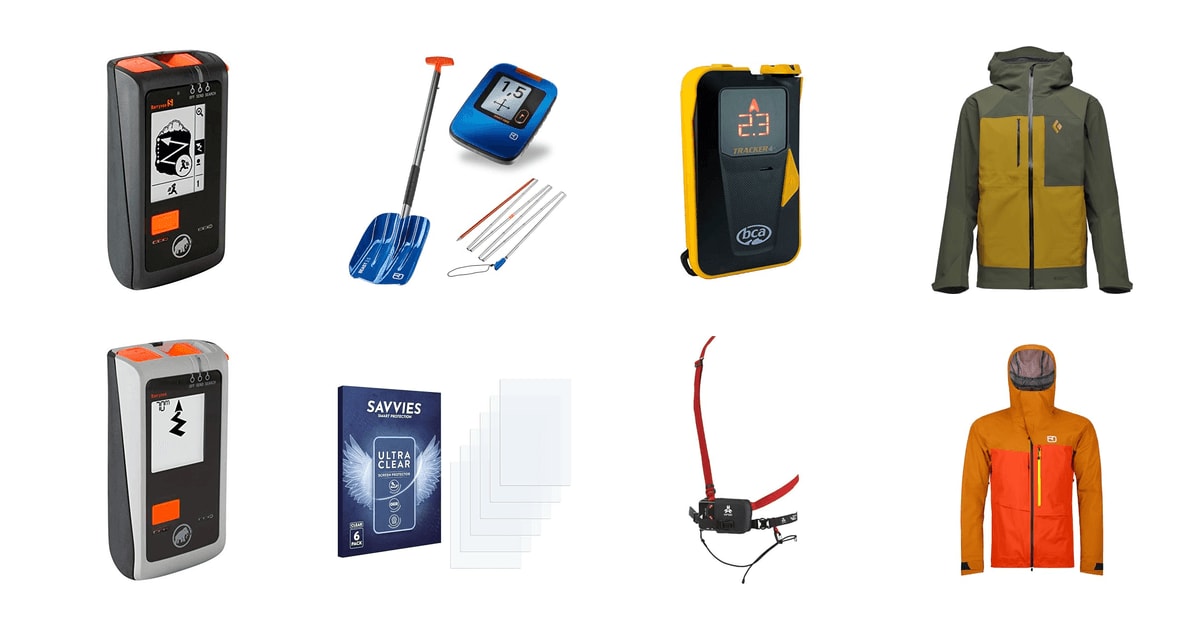
An avalanche transceiver spends almost all of its life doing nothing. It rides in a harness under your jacket, pulsing away on 457 kHz, and you forget it's there. Then a slope lets go, and suddenly you've got maybe fifteen minutes before your partner's odds turn bad. What matters in that moment is narrow: how fast you pick up a signal, how clearly the screen tells you where to walk, and whether you've practiced enough to trust what it says.
Here's the part no beacon fixes. Every certified transceiver here transmits on the same frequency and meets the same standard, so the hardware gap is smaller than the marketing suggests. The differences show up in two places: the last few meters of a fine search, and slides with more than one person buried. Skill closes that gap faster than money does. A beacon you drill with every month will beat a better one you've never taken out of its box.
This guide covers three-antenna, EN 300718-certified transceivers on the standard 457 kHz frequency — three antennas resolve a buried signal in all three axes, so an awkward orientation underground can't hide someone from you. A few listings that turned up alongside these beacons aren't beacons at all: a shell jacket, a screen protector, a holster. We've set those aside. We think that the Mammut Barryvox S is the best avalanche beacon for most people, and that the Mammut Barryvox is the one to buy if you don't need professional-grade multiple-burial tools.
Everything we recommend

The longest reach and the smartest multiple-burial tools

Nearly the same reach, minus the pro-level search tools

The easiest one to read when your hands are shaking
At a glance
| Product | Range | Weight | Price | |
|---|---|---|---|---|
| Mammut Barryvox S Avalanche BeaconTop pick | 70 m | 0.15 lbs | $339.99 |
 | Ortovox Rescue Set Diract Voice I ShovelAlso consider | — | 4.15 lbs | $430 |
| BCA Backcountry Access Tracker 4 Avalanche BeaconBudget pick | — | 7.6 oz | $399.95 |
 | Black Diamond Equipment - Men's Recon StretchAlso in lineup | — | 2.20 lbs | $399.96 |
| Mammut Barryvox Avalanche BeaconRunner-up | 70 m | 0.15 lbs | $352.31 |
 | savvies Screen Protector for Pieps MICRO BTAlso in lineup | — | — | $20.98 |
 | Arva Neo Pro Holster One SizeAlso in lineup | — | 0.66 lbs | $39.95 |
 | Ortovox Men’s 3L Ravine Shell JacketAlso in lineup | — | 420-472 g | $432 |
How we picked
Three antennas. We checked every specification sheet for a three-antenna design and EN 300718 certification. Anything with two antennas was out, because a buried unit lying perpendicular to your search line can slip past it.
Published range. We compared manufacturers' stated digital receiving ranges and effective search strip widths. More reach means fewer passes across a debris field, and fewer passes means minutes saved in a rescue.
Search under stress. We leaned on published reviews that compare how quickly inexperienced users complete a search. A display you have to interpret is a display that costs you minutes.
Rescuer safety. Motion-sensing auto-revert was a hard requirement. If a rescuer stops moving, the beacon has to return to transmit on its own so the next person can find them.
Owner reliability. We read owner feedback for patterns rather than one-off gripes — firmware update hassles, packaging problems, how the unit behaves at a trailhead check station in the cold.
Top pick
The longest reach and the smartest multiple-burial tools
Mammut Barryvox S Avalanche Beacon
This is the transceiver guides and patrollers reach for: a 70-meter digital receiving range, an analog mode that stretches further still, and marking logic built for slides with more than one victim. You'll need to practice with it, but it gives you the most to work with.
$339.99fromAmazonRange buys you time, and this one has the most of it. Mammut publishes a 70-meter digital receiving range with a matching effective search strip width, which means you can sweep a wide debris field in fewer passes. Switch to analog and the listed receiving bandwidth stretches to roughly 95 meters. That's the difference between picking up a signal on your first pass down a big slide path and walking the whole thing twice.
Multiple burials are rare, and most recreational riders will never work one. But if you lead groups, patrol, or ski a big face with a crew of six, the math changes. Once you mark a victim, the Barryvox S suppresses that signal and keeps refining the display toward the next one, so you're not untangling overlapping pulses with a shovel already in your hand.
Auto-revert is the feature you'll never notice until it saves you. If you stop moving for a couple of minutes — because a second slide caught you, or because you're heads-down digging — the beacon flips itself back to transmit. Without that, an incapacitated rescuer broadcasts nothing at all, and the next person on scene has no way to find them. Every serious beacon should do this. This one does it well.
The screen is the most information-dense in the category, and that cuts both ways. Owners moving up from older Mammut units describe the newer navigation as a clear improvement, and the display stays legible through polarized lenses. If you've taken a rescue course and drill your searches, all that detail is an asset rather than clutter.
Flaws but not dealbreakers
The learning curve is real. There are more modes, more menus and more on-screen information than a first-season backcountry skier needs, and under stress extra options are a liability. If you ski mellow side-country a handful of days a year, you're carrying depth you'll never use.
Firmware is the other sore spot. Owners report that updating the unit isn't the quick shop-counter job they expected — some dealers won't run a device-to-device update at all and send it off to a service technician instead. Plan for downtime if an update lands mid-season.
Runner-up
Nearly the same reach, minus the pro-level search tools
Mammut Barryvox Avalanche Beacon
It shares the flagship's three-antenna platform and the same published 70-meter digital receiving range, with a simpler interface and simpler marking. For a strong intermediate rider who isn't responsible for a group, that's most of the capability without the menu depth.
$352.31fromAmazonYou give up software here, not signal. Mammut lists the same 70-meter digital receiving range and the same effective search strip width for this beacon as for the Barryvox S. The antennas are arranged the same way, with a near-circular receiving field, so a buried unit lying awkwardly relative to you doesn't open up a dead zone. What you lose is the advanced marking layer, not the ability to find somebody.
Owner feedback is unusually consistent, and it's the practical kind. People report this beacon getting verified at a longer distance than partners' units at trailhead check stations, and holding up through repeated beacon-garden drills. That's the everyday reliability you want from a device that spends the entire season doing nothing at all until the one day it matters.
The backlit display is easy to read through polarized glasses, which sounds trivial right up until you're squinting at flat light with a fogged goggle on your forehead. Acoustic guidance helps too. During the coarse search you can keep your eyes on the debris and your ears on the tone, instead of walking a slide path while staring at a screen.
Flaws but not dealbreakers
Marking is basic. Once you've found one victim, this beacon flags them and moves on, but it won't keep re-prioritizing as three pulses overlap in a tight debris pile. For a guide, that's disqualifying. For a party of three in simple terrain, it's fine.
There's no Bluetooth, so group checks happen the old way: one person in search mode, everyone else filing past. That works, and it's how it's been done for years. It's just slower on a cold morning when everyone's impatient to start skinning.
Budget pick
The easiest one to read when your hands are shaking
BCA Backcountry Access Tracker 4 Avalanche Beacon
Big directional arrows, a numeric distance readout, and almost nothing else to think about. If you're in your first season out of bounds, this is the beacon that asks the least of you while you're still learning how to move fast.
$399.95fromAmazonUnder stress, a simple display beats a clever one. The Tracker 4 gives you an arrow, a number and a tone. There's no menu to page through, no mode you can accidentally leave it in. Published reviews consistently put this interface at the top for untrained users, and that counts for more than a few extra meters of range when you've never run a real search on a real slope.
Signal Suppression covers the multiple-burial basics: mark the victim you've found and their pulse drops out of the picture. Big Picture Mode does the opposite, pulling back to show every signal it can hear so you can plan a route across the debris instead of chasing whichever pulse is loudest. For a party of three or four, that's genuinely enough.
It also arrives ready to go. The harness and batteries are in the box, so you're not hunting for spare cells in a glove compartment at dawn. It's light enough on the chest strap that you'll stop noticing it after a few days, which is exactly what you want from something you're supposed to wear every single time you ski.
Flaws but not dealbreakers
The multiple-burial tools stop where the Barryvox S keeps going. If you start leading groups in complex terrain, you'll outgrow this search logic within a season or two, and a slide path is the wrong place to discover that.
There's no Bluetooth, so no phone-based group check. And a fair number of buyers report boxes arriving already opened, with gear that looks handled. The beacons themselves appear to work, but check the seal, the harness and the battery compartment before your first tour, and send it back if anything looks off.
The Tracker 4 comes with a five-year limited warranty.
Who this is for
Buy a beacon if you ever leave the ropes — side-country laps, a skin track, a snowmobile in the trees. It only works as part of a set: beacon, probe, shovel, and a partner who carries the same three and knows how to use them. If you ski strictly inbounds at a patrolled resort and never duck a rope, you don't need one, though plenty of people wear one anyway for tree wells and deep-snow burials.
This guide covers three-antenna, EN 300718-certified transceivers you'd carry recreationally, plus one complete rescue kit. It doesn't cover airbag packs, RECCO reflectors, or the professional gear patrol teams buy through dealers. And nothing here substitutes for a formal course — AIARE Level 1 or the equivalent — before you travel in avalanche terrain.
How we picked
Antennas: three, always, since a two-antenna unit can miss a victim whose beacon is lying perpendicular to you underground. Range: we compared published digital receiving ranges and search strip widths, because more reach means fewer passes across the debris. Interface: we weighted published reviews of how fast untrained users complete a search, since panic makes a cluttered screen useless. Rescuer safety: motion-sensing auto-revert is non-negotiable, and every pick here has it. Reliability: we read owner feedback looking for repeated themes rather than isolated complaints, from firmware update headaches to range that disappoints at a check station.
Other avalanche beacons worth considering
If you want the beacon, shovel and probe in one purchase: The Ortovox Rescue Set Diract Voice I Shovel ($430) — The Ortovox Diract Voice rescue set is the tidiest way to get all three at once, and the beacon inside it talks. It reads directions aloud so you can keep your eyes on the debris instead of a screen, which is exactly where a first-timer falls apart. Published reviews report that voice guidance helps least-experienced searchers the most. The kit adds the Beast shovel and a 240 cm aluminum probe, so you walk out of one purchase with a complete rescue setup. Two catches: the prompts are hard to hear in hard wind or near a helicopter unless you run an earphone, and if you already own a decent shovel and probe, you're buying them a second time.
The competition
This is what the research surfaced, not a map of the whole market. The transceiver category is small — a handful of European brands, most of them selling two or three closely related models — so a search that looks broad often isn't. Everything else in this lineup turned out to be gear that lives next to a beacon rather than replacing one: a jacket, a holster, a screen protector. We've listed those separately below with the reason each one is out, because none of them will find a buried partner.
Batteries and practice
Batteries first. Install fresh alkaline cells at the start of the season and swap them once a year no matter what the meter says, because alkalines report their charge honestly in the cold while some lithium cells read full and then drop off a cliff. Check your manual before switching chemistry — Mammut lists lithium support for the Barryvox S with a longer stated transmit life, and most brands don't. Never head out on cells somebody else installed. Then drill. A monthly beacon-garden session with the partners you actually ski with does more for your rescue time than any feature on any screen, and most mountain towns run free practice sessions all winter.
Questions we get
Do beacons from different brands work together?
Yes, and it's the one thing you never have to worry about. Every certified transceiver transmits on 457 kHz and complies with EN 300718, so a Mammut can find a buried BCA and the other way around. Brand choice is about interface and range, never compatibility.
What's the difference between a two-antenna and a three-antenna beacon?
A two-antenna beacon reads a signal across two axes. A third antenna adds the vertical one, so the unit resolves a buried beacon no matter how it's lying under the snow. That's the whole argument: a two-antenna model can struggle badly when the buried device sits perpendicular to your search line. Everything in this guide has three antennas, and you shouldn't buy one that doesn't.
Should I use alkaline or lithium batteries?
Default to fresh alkaline. They report their charge honestly in freezing temperatures, while lithium cells can read full and then fade fast, which is a nasty surprise mid-tour. Some beacons are explicitly rated for lithium — Mammut lists it for the Barryvox S with a longer stated transmit life — so follow the manual for your specific unit. Either way, replace them every season.
Do I really need a probe and shovel too?
Yes. The beacon narrows the search to a small patch of snow, the probe tells you exactly where and how deep, and the shovel is what actually gets your partner out. Avalanche debris sets up close to concrete within minutes, so digging with your hands isn't a plan. A beacon on its own is half a rescue.
Can I use a phone app instead of a beacon?
No. Phone apps don't transmit on 457 kHz, and no rescue transceiver can hear them. Bluetooth on a beacon is only for group checks and firmware updates — the search itself never touches your phone. Carry a certified beacon every time you're in avalanche terrain.
What is multiple-burial marking, and do I need it?
Marking lets you flag a victim you've located so their signal drops out and the display points you toward the next one. Basic marking is on every beacon here, and for a small recreational group it's enough. Advanced algorithms, like the one in the Barryvox S, keep re-sorting overlapping signals as you move, which matters when a slide path holds three or more people. Buy it if you guide or patrol; skip it if you ski with two friends.
Why you should trust us
For this guide:
- We read the manufacturer specification sheets for each transceiver and compared published receiving ranges, antenna counts and certification claims side by side.
- We compared published reviews from outdoor gear publications that run repeatable beacon-search comparisons, weighting their findings on interface clarity for untrained searchers.
- We read owner feedback on each listing for recurring themes — firmware update hassles, packaging problems, how each unit performs at a trailhead check station — rather than isolated complaints.
- We read owner reviews on every listing, weighted toward the critical ones, because that is where the recurring failures show up.
- We have a systematic way of automatically fetching the latest prices, so the numbers on this page stay current.
- This is a research-focused guide, so the team may not own every product listed — though we often do own the top winners, which gives us extra context for the recommendations.
- We don't accept free products, and the retailer commission never changes which product we recommend.
Sources
Best Avalanche Beacons 2026 – OutdoorGearLab, OutdoorGearLab
Best Avalanche Beacons – Switchback Travel, Switchback Travel
Avalanche Beacon Buying Guide – REI Expert Advice, REI
Avalanche Rescue – American Avalanche Association, American Avalanche Association (AAA)
Best Avalanche Beacons – Powder Magazine, Powder Magazine
Amazon product listings and owner reviews for all 8 products
Manufacturer specification pages for each product
Some passages in this guide may be paraphrased with AI help. Prices are refreshed automatically.
More like this.
Continue exploring lifestyle reviews and recommendations.

The Best Backyard Gas Grills
A gas grill earns its keep on a Tuesday, not just on the Fourth of July. You want it to light on the first try, get hot enough to sear a steak, and hold a…

The Best Travel Pillows for Neck Support
A travel pillow has one job: keep your head from falling forward while you doze upright. That sounds simple, but the physics are brutal. The American…

The Best Pellet Grills and Smokers
A pellet grill is a wood-fired oven that happens to live on your patio. You dump hardwood pellets in the hopper, set a number on a dial, and an auger…

The Best Sunscreens for Outdoor Activities
Sunscreen for a long day outside has a different job than the stuff you dab on before the commute. It has to survive sweat running down your forehead, a…

The Best Binoculars for Birdwatching and Nature
Good binoculars change what a walk feels like. A bird that was a gray smudge in a hedge becomes a chipping sparrow with a rusty cap. What matters most…

The Best Duffel Bags for Travel and Weekenders
A duffel is the bag you grab when a suitcase feels like too much. Three days at a friend's place, a Friday flight straight from the office, a weekend at…